
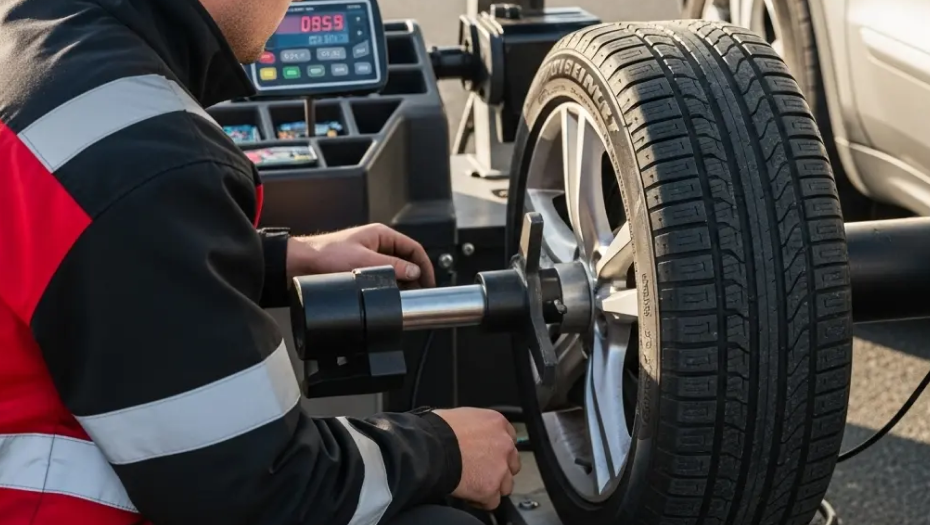
Mobile tyre fitters do balance wheels, completing the balance inside the van before the wheel goes back on your car. Whether you are planning a routine tyre change or stuck at the roadside right now, a mobile fitter can reach you and complete the full job on site, including balancing, without you needing to move the vehicle anywhere.
If you feel vibration through the steering wheel after a tyre fitting, wheel imbalance is one possible cause, although other vehicle issues can also contribute. A portable electronic balancing machine spins the wheel and tyre assembly to detect where the weight is uneven. The reading tells the technician exactly where to place the balance weights on the rim, taking only a few minutes per wheel before the tyre is refitted. This guide covers how the process works, what equipment is involved, when balancing is needed, and how to choose a mobile fitter who does it properly.
How Do Mobile Tyre Fitters Balance Wheels?
Mobile tyre fitters balance wheels using a portable electronic balancing machine carried inside the van. You do not need to move your car, arrange a garage visit, or wait until the morning. The fitter arrives at your location, removes the tyre, fits the new one, balances it inside the van, and refits the wheel before leaving. The entire process is completed at the vehicle’s location.
Mobile tyre fitters use portable balancing machines similar to those found in traditional tyre fitting centres. The wheel and tyre assembly is mounted onto the portable machine, which spins the assembly to measure the distribution of weight. Based on the measurements, the technician adds or removes small weights to the wheel rim to achieve proper balance, then verifies the result by rechecking the wheel.
Step-by-Step: How Mobile Wheel Balancing Works
1. Tyre Removal and Fitting
The old tyre is removed from the rim, and the new tyre is fitted in its place. At this stage, the combined assembly is ready for balancing.
2. Mounting on the Balancing Machine
The wheel and tyre assembly is placed on the portable electronic machine inside the van. Spinning the assembly at speed detects any variation in weight distribution around the circumference.
3. Weight Measurement and Placement
The machine identifies exactly where additional weight is needed and by how much. The fitter clips or adhesive-bonds small balance weights to the rim at the precise points indicated.
4. Verification and Refitting
The assembly is spun again to confirm the balance sits within acceptable tolerances. The quality of a wheel balance depends on both the equipment used and the technician carrying out the work.
What Equipment Do Mobile Tyre Fitters Use for Balancing?
When a mobile fitter arrives, you are not waiting for a van with basic kit. A properly equipped mobile tyre service carries everything needed to complete a full, professional fitting on site, including the same class of electronic balancing equipment found in a fixed tyre centre. This is particularly important during emergencies when the repair needs to be completed correctly on the first visit.
Mobile tyre fitting vans are equipped with the latest tyre changing and balancing technology, allowing them to work on wheels up to 24 inches, with wheels professionally balanced inside the fitting van before being fitted back on the vehicle.
This is worth verifying before you book, as not every mobile service invests in proper electronic balancing equipment. The quality of a balance depends primarily on the machine used, and a fitter relying on a basic hand-spin method will not produce the same result.
Equipment Carried in a Professional Mobile Fitting Van
- Portable electronic balancing machine: Spins the wheel assembly and identifies imbalance to within fractions of a gram
- Balance weights: Clip-on or adhesive weights fitted to the rim at precise positions indicated by the machine
- Tyre changer: Removes and mounts tyres from rims without damaging the bead or rim edge
- Torque wrench: Ensures wheel nuts are tightened to the manufacturer’s specified torque
- Valve tool: Replaces the valve stem as part of every fitting
- Compressor: Inflates the tyre to the correct pressure for the vehicle
A Note on Alloy Wheels
If your vehicle has alloy wheels, confirm with the fitter before booking that they use adhesive weights rather than clip-on weights on the outer rim edge. Clip-on weights applied to an alloy rim can mark or chip the finish. Professional mobile fitters use adhesive weights on the inner face of the rim, which balance the wheel correctly without any cosmetic damage.
Every Mobile Tyre Local van carries a full professional equipment setup, including electronic balancing machines and alloy-safe adhesive weights. Whether your car is in your driveway or at the roadside, our team arrives prepared to complete the job properly without needing any additional trips or equipment.
Why Is Wheel Balancing Important After Fitting?
Every new tyre fitted to a rim creates a fresh weight distribution that is rarely perfectly balanced. If your steering wheel has been shaking since your last tyre change, wheel imbalance may be one possible cause. Balancing corrects the weight distribution before you drive, preventing vibration, uneven wear, and suspension stress that gets worse the longer it goes unchecked.
According to the RAC, unbalanced wheels can cause vibrations in the steering wheel, car floor, or seats, especially at higher speeds. They can also lead to uneven tyre wear, reduced fuel efficiency, added strain on the suspension system, and less predictable vehicle handling due to increased rolling resistance.
Skipping balancing at the point of fitting means addressing the consequences later at greater cost, both in tyre replacement and potential suspension repairs.
What Happens If You Drive on Unbalanced Wheels
- Premature tyre wear: Uneven contact with the road wears the tread unevenly, reducing the lifespan of a brand-new tyre
- Steering vibration: The steering wheel shakes at speed, increasing driver fatigue on longer journeys
- Suspension damage: Constant vibration accelerates wear on wheel bearings, shock absorbers, and steering components
- Poor fuel economy: Rolling resistance increases when a wheel is out of balance, requiring more engine effort to maintain speed
- Reduced road grip: Uneven tyre contact compromises handling and braking performance, particularly in wet conditions
Did You Know?
A wheel can be as little as 5 to 10 grams out of balance and still produce noticeable vibration at motorway speeds. That is roughly the weight of a few coins, which is why balancing is done with precision electronic equipment rather than by feel or visual inspection.
Signs Your Wheels Need Balancing
If you are reading this because something feels wrong with the car right now, trust that instinct. The most common sign that wheels need balancing is vibration through the steering wheel at speed, typically between 50 and 70 mph. Other symptoms include uneven tyre wear, increased road noise, and the car feeling unsettled through bends. These signs do not always appear immediately after a fitting. Sometimes they develop gradually over weeks as the imbalance worsens, or an existing balance weight shifts or falls off.
Common Symptoms of Wheel Imbalance
- Steering wheel vibration: Shaking felt through the wheel, most noticeable at motorway speeds
- Seat or floor vibration: Vibration in the seat typically indicates rear wheel imbalance rather than front wheel imbalance
- Uneven tyre wear: Scalloping, cupping, or flat spots appearing across the tread surface
- Increased road noise: A humming or droning sound that rises and falls directly with vehicle speed
- Poor fuel economy: Higher fuel consumption without another obvious cause
- Unstable handling: The car feels vague or unsettled when changing lanes or through bends
When Vibration Is Speed-Dependent
Vibration caused by wheel imbalance often appears at a specific speed and may become less noticeable as speed increases. This behaviour is a common sign of wheel imbalance rather than incorrect tyre pressure or suspension faults.
Wheel balancing is often one of the first things technicians check when diagnosing speed-related vibration. Leaving the problem unresolved can lead to uneven tyre wear, additional strain on wheel bearings, and suspension damage, all of which are far more expensive than a routine wheel rebalance.
If any of these symptoms sound familiar, you do not need to drive the car to a garage. Mobile Tyre Local can come to wherever you are, assess the issue, and resolve it on site the same day. Call now, and a fitter can be with you within the hour.
When Should You Get Your Wheels Balanced?
Wheels should always be balanced after a new tyre is fitted, after hitting a significant pothole, or when vibration develops unexpectedly. Regular balancing every 5,000 to 7,500 miles also extends tyre life and keeps the ride smooth. Most drivers only think about balancing when something already feels wrong, but by that point, the tyre wear and suspension stress have already started. Treating it as routine maintenance rather than a reaction to a problem saves money on tyres and suspension components over time.
Situations That Require Wheel Balancing
- After every new tyre fitting: Balancing is always required when a new tyre is mounted on any rim.
- After hitting a significant pothole: Impact can dislodge existing balance weights or shift the weight distribution.
- Every 5,000 to 7,500 miles: Regular rebalancing as part of routine maintenance extends tyre life.
- When vibration starts unexpectedly: Balance is the first check when steering or seat vibration develops.
- After a puncture repair: Any repair involving removing the tyre from the rim should be followed by rebalancing.
- After kerbing an alloy wheel: Kerb impact can shift weight distribution even without visible rim damage.
How Long Does Mobile Wheel Balancing Take?
Mobile wheel balancing takes approximately five to ten minutes per wheel. A full four-wheel balance completed as part of a tyre fitting appointment adds relatively little time to the overall service. In an emergency situation, this means you are back on the road quickly without a prolonged wait at the roadside.
Pro Tip:
If you have alloy wheels and are booking a mobile fitting, ask specifically before the appointment whether the fitter uses adhesive weights on the inner rim face. This is the correct method for alloys. Clip-on weights on the outer rim edge can mark the finish of some alloy wheels, which is why many fitters prefer adhesive weights.
Mobile Wheel Balancing vs. Garage Wheel Balancing
Mobile wheel balancing can achieve results comparable to garage balancing when professional equipment is used correctly. The practical difference is convenience rather than quality. At midnight, after a breakdown, or when you simply cannot leave the car, a garage is not a realistic option. A mobile fitter is. The job is completed wherever the car is parked, whether that is your driveway, a car park, or a layby.
How the Two Services Compare
Factor | Mobile Tyre Fitter | Tyre Garage |
Equipment quality | Portable electronic machine | Fixed electronic machine |
Balancing accuracy | Comparable when properly equipped | Standard |
Convenience | Comes to your location | You drive to them |
Availability | 24/7 including emergencies | Standard business hours |
Waiting time | None, work done where the car is parked | Waiting room or drop and collect |
Emergency use | Available day and night | Closed outside business hours |
Alloy wheel suitability | Yes, with adhesive weights | Yes, with adhesive weights |
Cost | Comparable to garage rates | Standard market rate |
The key factor when choosing a mobile fitter is confirming they carry proper electronic balancing equipment. A fitter using a basic hand-spin method rather than an electronic machine will not produce the same accuracy, particularly for motorway driving or vehicles with performance tyres.
FAQs
Do mobile tyre fitters always balance wheels after fitting?
Reputable mobile tyre fitters include wheel balancing as part of every tyre fitting. The wheel and tyre assembly is balanced inside the van using a portable electronic machine before being refitted to the vehicle. Always confirm balancing is included when booking, as equipment quality varies between providers.
Is mobile wheel balancing as accurate as a garage balance?
When a professional portable electronic balancing machine is used, the accuracy is comparable to that of a fixed tyre centre. The quality of wheel balancing depends on the equipment and the skill of the technician rather than whether the service is mobile or fixed.
Can a mobile tyre fitter balance wheels on alloy rims?
Mobile tyre fitters balance alloy wheels using adhesive weights on the inner face of the rim, which avoids any cosmetic damage to the alloy finish. Confirm this with the fitter when booking if your vehicle has alloy wheels, as some services use clip-on weights that can mark the rim.
How do I know if my wheels need rebalancing after a pothole?
The most common sign is vibration through the steering wheel or seat that appears after hitting a significant pothole. If the vibration is speed-dependent and was not present before the impact, rebalancing is the likely solution. A mobile fitter can come to your location to assess and correct the balance without a garage visit.
Does wheel balancing need to be done every time a tyre is fitted?
Every time a tyre is removed from a rim and refitted, the combined weight distribution of the assembly changes. Balancing is required after every fitting, including after a puncture repair that involves removing the tyre from the rim.
Can I drive with unbalanced wheels after a mobile tyre fitting?
Short distances are possible but not advisable. Unbalanced wheels cause vibration, accelerate tyre wear, increase fuel consumption, and put additional stress on suspension components. A professional mobile fitting includes balancing before the wheel is refitted to prevent these issues from developing.
Help Is Just One Call Away
Mobile tyre fitters do balance wheels, and the complete service, fitting, balancing, and inflation, is done at your location before the fitter leaves. Whether you need a routine tyre change booked in advance or an emergency repair right now, you do not need to move the car or find a garage. The service comes to you.
Mobile Tyre Local carries professional electronic balancing equipment in every van and operates 24 hours a day, 7 days a week, reaching customers at home, at work, and at the roadside across the area. Rated 4.8 stars by customers, the service covers tyre replacement, patch repair, plug repair, spare wheel fitting, and motorway rescue, with wheel balancing included as standard on every fitting.
Visit tyre-fitting.co.uk or call 07731 306 351 now, and a fitter will be on the way.